

Sourdough Rye Bread
lots of rye + low hydration

This recipe has been getting a lot more traffic on my site lately, so I thought I’d share it here for anyone who might want to give it a try. I’ve included the full recipe below but you can also head to the Sourdough Rye Bread blog post for the printable recipe as well as more step-by-step photos.
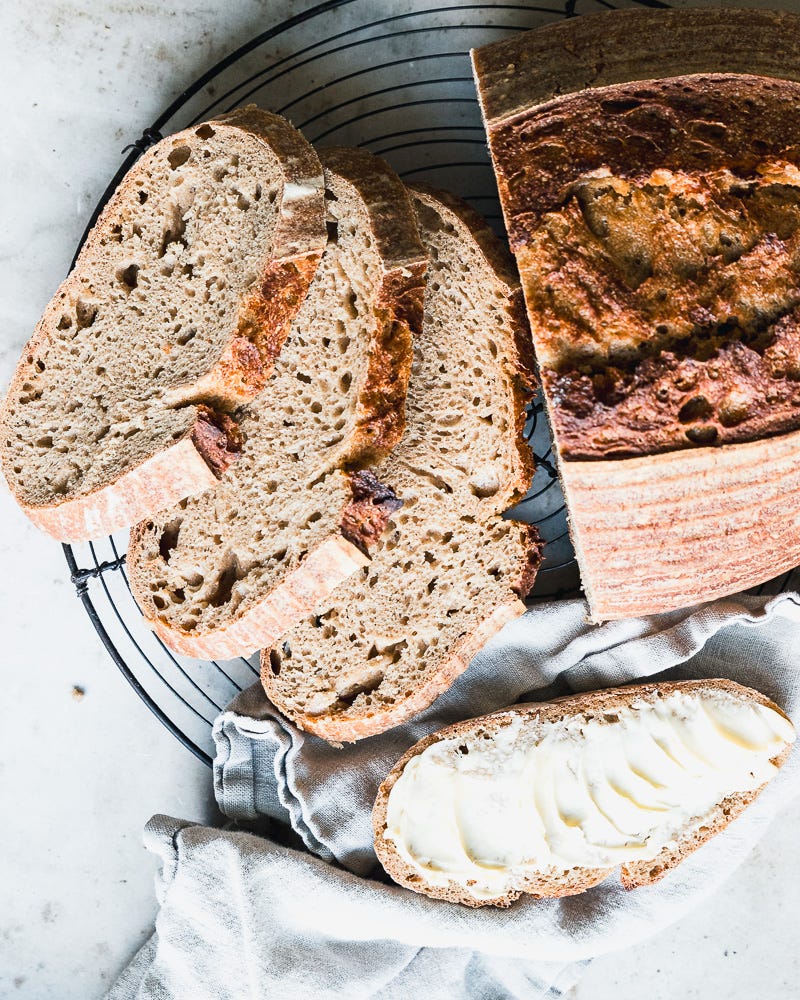
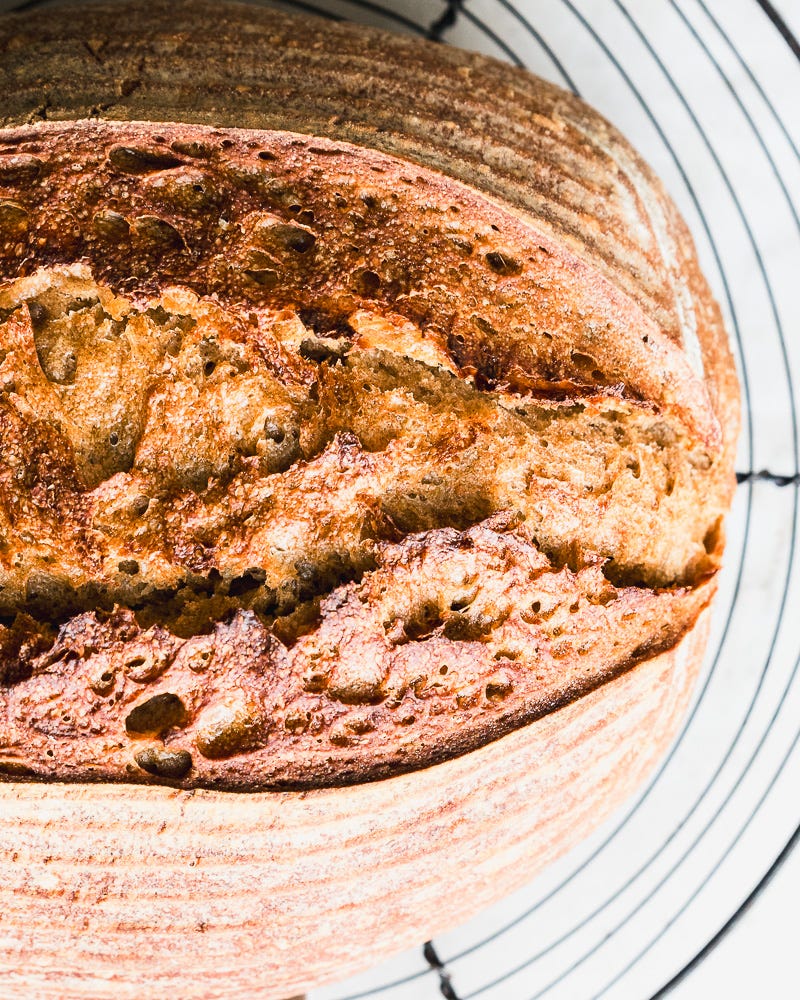
My easy Sourdough Rye Bread has a tangy, complex flavor, a beautiful crackly crust, and a springy, moist, tight crumb that is perfect for sandwiches. The dough comes together in a flash in the stand mixer but you can also perform stretch and folds if that’s the method you prefer. My recipe is lower hydration than most, making it very easy to work with and nearly foolproof.
It is perfect for toast, sandwiches, dipping into soups, serving alongside eggs, feeding to teething toddlers (my three-year-old was teething when I developed this recipe in 2024 and he loved gnawing on it!), or even turning into croutons. I love how rye sourdough tastes - it is like a nuttier, more complex whole wheat flavor and it really puts the sour in sourdough. It is so tangy and delicious! Toasted, smeared with salted butter, and topped with homemade jam is my idea of perfection.
And the lower hydration of this dough is very intentional and here’s why: First, it is so much easier to work with. Second, I wanted a tight crumb. When I have a slice of toast, I want the butter to make it into my mouth, not dribble through my bread and down my arm. Similarly, if I make a grilled cheese or other sandwich, I want my toppings to stay in my sandwich, not fall through the larger holes that a higher hydration dough often produces. Don’t get me wrong - I love those beautiful bubbly loaves and I have some higher hydration recipes in the works, but for this particular sourdough rye loaf I knew I wanted to keep it lower hydration so I stuck in the low 70% range.
a few notes on the ingredient list:
water: filtered or clean tap/well water is fine. If you have heavily treated water, leave it out overnight so the chlorine can dissipate before proceeding with this or any sourdough recipe.
honey and molasses: I know using both might seem a little extra, but I really do like the combination. But you can use one or the other if you don’t want to bother with both.
ripe, bubbly sourdough starter: You’ll want to feed your starter 4-12 hours before making this dough so that it is at its peak.
rye flour: I use King Arthur Medium Rye, but you can use your favorite.
bread flour: I use King Arthur Organic Bread Flour. I have made this with all purpose and it is a very difficult dough. If you use all purpose instead of bread flour, you will need to add a bit more flour or a little less water to make the dough workable. And you will have a less chewy, springy loaf.
salt: I always use Diamond Crystal Kosher Salt.
Instructions - Stand Mixer or Stretch and Fold
(Yes, you can make sourdough in a mixer)
This was the first sourdough recipe I was brave enough to make using my stand mixer. Rye flour can be sticky to work with and I decided to just let my mixer do the work after making this manually a few times. It really blew my mind and changed my whole outlook on sourdough! Instead of spending a few hours performing stretch and folds, this dough mixes for about 10 minutes in the stand mixer before a standard bulk fermentation period. I have the kind of hands that sourdough likes to stick to, so this stand mixer method is seriously life changing!


Stretch and fold
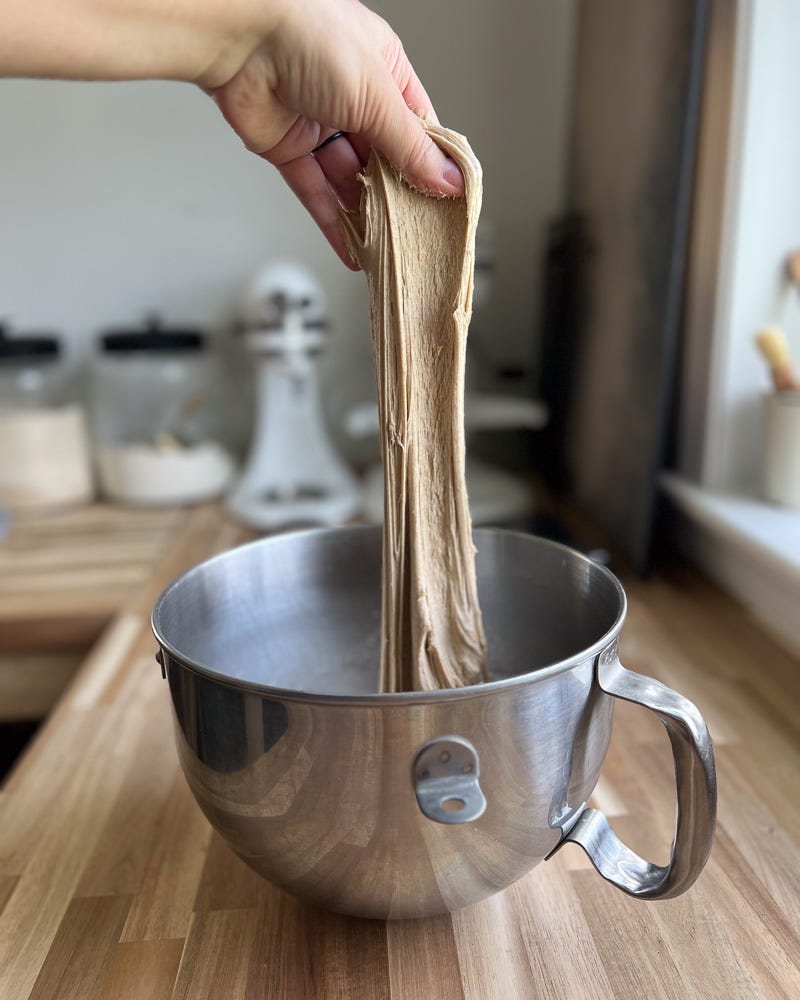
If you prefer to perform stretch and folds, you will do them every 15 minutes for the first hour and then perform 3 more 30 minutes apart. I recommend keeping a dish of water nearby - rye dough likes to stick to your hands and wetting your hands helps a bit.
Top Tips
Wet hands are your friend when working with this and any sourdough - keep a small dish of water nearby
Add a couple ice cubes to the hot Dutch oven and clamp on the lid to trap steam. This will help with oven spring and forming a nice crust on the bread.
Place a small rack or trivet under the loaf after the first 30 minutes to prevent the bottom from browning too much. I use the little round wire rack that came in my Instant Pot.
Cover loaf loosely with foil for the last 10-15 minutes to prevent the loaf from over-browning if desired.
Allow loaf to cool for several hours or overnight to ensure the best texture. This is important with all sourdough loaves but especially with rye.
If you are new to sourdough baking, remember that it is a learning process but a very fun one. The more you bake the more confidence you will gain. I am still learning so much and I’ve been baking with sourdough for about 5 years. Even my flattest, worst loaves were still edible.
Substitutions and Variations
I do not add any seeds or flavorings to mine, but you can if you want more of a deli-style rye bread.
Flavorings - add caraway seeds, poppy seeds, and/or onion flakes for a true NY deli experience.
Rye - I use King Arthur Flour Medium Rye, but you can use a darker, coarser rye if you prefer just know that this will change the hydration a bit and you will most likely need to adjust. You can also use less rye and more bread flour if you want a fluffier loaf.
Bread Flour - I have made this with all-purpose instead of bread flour and it is a lot stickier and quite a bit harder to work with. It also does not produce as tall a loaf. If you happen to try it with all-purpose, I recommend reducing the water a bit or adding a bit more flour.
Honey and Molasses - After making many loaves with one or the other I landed on the combination but of course you do not have to use both. You can use all honey or all molasses. The molasses gives a little bit of a darker color and it brings out more of a grainy flavor (if you’ve ever smelled horse feed with molasses you know what I mean!). The honey is more subtle than the molasses. Both are lovely choices and you can’t go wrong.
Shaping - You can make this in a batard (oval) shape or a small boule (round) shape. If you don’t have a banneton basket, use a bowl lined with a well-floured tea towel. I’m planning on trying to bake this in a loaf pan - will update if/when I do!
Sourdough Rye Bread Recipe
(for a printable recipe and more step-by-step photos head over to the blog post)
INGREDIENTS
284 grams water (1 ¼ cups)
200 grams active, bubbly sourdough starter (about 1 cup)
160 grams medium rye flour (1 ½ cups)
300 grams white bread flour (2 ¾ cups)
10 grams kosher salt (2 teaspoons)
21 grams honey (1 tablespoon)
21 grams molasses (1 tablespoon)
INSTRUCTIONS
Stand Mixer Method:
Mix water, honey, molasses, and starter in bowl of stand mixer. Add flours and salt. Mix with dough hook for a minute or so until a sticky, rough dough forms. Leave covered for 30 minutes.
After 30 minutes, continue kneading on speed 2 with dough hook for 5 minutes. Scrape sides and continue for 5 more at speed 3 until dough is smooth and pulls away from sides and bottom. It will still be sticky.
When dough has finished kneading, cover and allow to bulk ferment at room temperature for 2-3 hours until dough has risen by about 25%.
When dough has risen, dump onto floured work surface, shape to fit your banneton or vessel of choice. This can be sticky so just be patient, use extra flour or damp hands, and a bench scraper can be really helpful.
Flour banneton and dough very well. Place shaped dough in banneton seam side up. Cover and refrigerate for 12-24 hours.
An hour before you are ready to bake, preheat oven to 450 degrees F with covered Dutch oven inside for 1 hour.
When oven is preheated, remove dough from refrigertor, tip out onto parchment, score with a razorblade, lame, or very sharp knife.
Immediately transfer dough to preheated Dutch oven using parchment to lift and lower it into the pan. Cover and bake for 30 minutes at 450 degrees F.
After 30 minutes, place a small trivet under loaf and bake uncovered for 10-15 minutes. Cover loosely with foil to prevent over browning if desired. Loaf is done when it reaches 200-210 degrees F.
Remove loaf from Dutch oven and allow to cool on a rack uncovered for a 4-6 hours or up to overnight.
Stretch and Fold Method:
Mix all ingredients in a large bowl until a shaggy dough forms. Leave to rest for 30 minutes. After 30 minutes mix once more to ensure all ingredients are well combined.
Next, you will perform 6 sets of stretch and folds over the next couple hours. Perform the first 2-3 at 15 minute intervals and the last 3-4 at 30 minute intervals. Leave the dough covered and in a warm spot in between each set.
After all stretch and folds have been completed, cover dough and allow to bulk ferment at room temperature for 2-3 hours until dough has risen by about 25%.
Proceed with instructions 4-10 as written above.
NOTES:
I have given the cup measurements but just be aware that weight measurements will always be more accurate.
If you want to make this even easier to work with you can reduce the water by 60 grams (¼ cup) and you will have a much less sticky dough and an even tighter crumb once baked. You won’t get a very dramatic oven spring but it still makes a really good loaf.
Your bulk fermentation time could be much less or much more than mine. It takes about 3 hours in my 70 degree kitchen and I often place my dough in my oven with the light on. Rye dough rises much faster than other doughs so keep a close eye and shape your loaf as soon as the dough has risen by 25%.
This Week’s Top Ten Recipes
From 1st to 10th, here are the top visited recipes on WTK for the past week.
Sourdough Discard Cinnamon Rolls (same day or overnight)
How to Make a Sourdough Starter (easy beginner’s guide)
Sourdough Discard Crackers (with olive oil, rosemary, and parmesan)
Sourdough Discard Focaccia (same day or overnight)
Sourdough Cheese Crackers (like cheez-its!)
I took last week off from newslettering as we had my first born’s 23rd birthday to celebrate. We made chicken picatta and tiramisu for about 15 and it was so good and so fun - I love that my big kid still wants my home-cooking for his birthdays. Also, Easter (a quiet one for us).
It was a nice break and my first one in over a year, but I’m back to regularly scheduled newsletters and I’m really trying to get a few new recipes finished up. Things have been moving slowly with my work as we’re busy raising our littlest boys (3-year-old and 4-month-old). I wouldn’t trade it for anything, but it does make time for recipe developing, photographing, and writing very scarce. My college girl will be home in a few weeks and she has already been hired as our part-time nanny so mom can get some work done this summer.
Also, I finally (FINALLY) got my hands on a grain mill. I’ll write more about it in an upcoming newsletter, but I’ve been experimenting with freshly milled flour and it has been so fun! I can’t wait to share more about it. Let me know if fmf recipes are something you’re interested in.
Take care, have a great weekend, and hit reply to this email if you have any questions!
Thanks so much for being here - Anita
